Winter driving in Ontario can be challenging—especially for new drivers who are still building confidence behind the wheel. Snow-covered roads, icy intersections, reduced visibility, and freezing temperatures require extra caution. Learning how to drive safely in winter conditions is an essential skill for every Ontario driver.
Below are essential winter driving tips to help new drivers stay safe, confident, and prepared on Ontario roads with
Sun Driving Academy.
1. Install Winter Tires Early
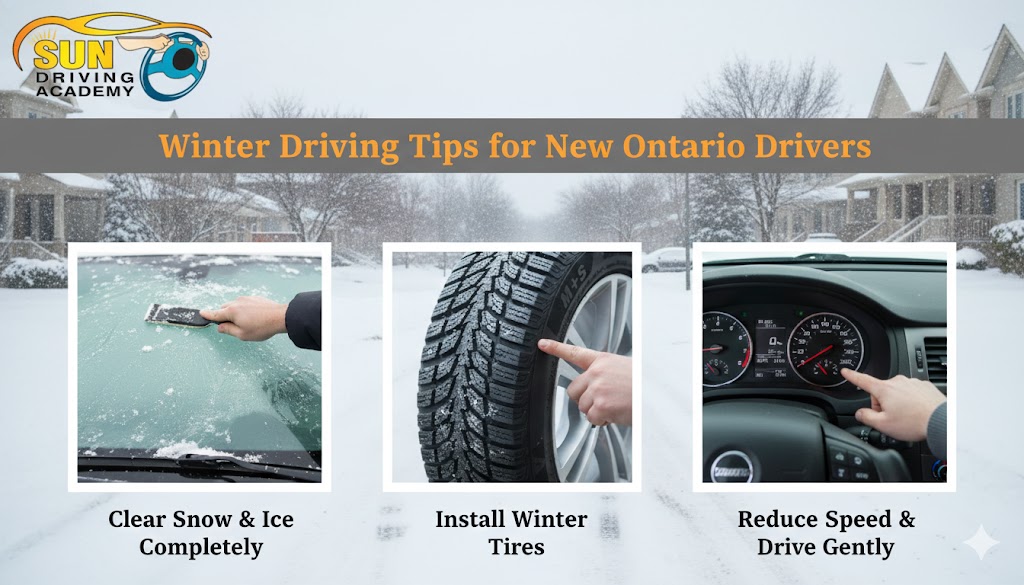
Winter tires are not optional in Ontario—they are a safety necessity. They provide better traction, shorter stopping distances, and improved vehicle control on snow and ice.
Tip: Install winter tires when temperatures drop below 7°C, usually by late October or early November.
https://www.ontario.ca/page/winter-driving-tips
2. Slow Down and Increase Following Distance
Winter roads reduce tire grip, meaning vehicles take longer to stop—even at lower speeds.
-
Reduce your speed, even if the posted limit is higher
-
Maintain at least 6–8 seconds of following distance
-
Brake gently to avoid skidding
- https://sundrivingacademy.ca/beginners-driving-lesson-online/
3. Practice Smooth Steering and Braking
Sudden movements can cause loss of control on slippery roads.
-
Accelerate slowly
-
Turn the steering wheel gently
-
Avoid slamming the brakes
-
If skidding occurs, look where you want to go and steer smoothly
New drivers should practice these skills in empty parking lots during light snow.https://sundrivingacademy.ca/contact
4. Understand Black Ice
Black ice is one of the most dangerous winter driving hazards because it’s nearly invisible. It commonly forms on:
-
Bridges
-
Overpasses
-
Shaded roads
-
Early mornings and evenings
If you hit black ice: Stay calm, avoid sudden braking, and gently steer straight until traction returns.
5. Clear Snow and Ice Completely
Ontario law requires drivers to remove snow and ice from their vehicles before driving.
Before hitting the road:
-
Clear all windows and mirrors
-
Remove snow from the roof and hood
-
Clean headlights, taillights, and license plates
This improves visibility and prevents snow from blowing onto other vehicles.
6. Keep Emergency Supplies in Your Car
Every new driver should carry a winter emergency kit, including:
-
Blanket and warm gloves
-
Flashlight
-
Ice scraper and snow brush
-
Jumper cables
-
Phone charger
-
Non-perishable snacks
Being prepared can make a big difference if you get stuck.
7. Use Headlights in Snow and Low Visibility
During snowfall, fog, or low-light conditions, always turn on your headlights—not just daytime running lights. This ensures your taillights are visible to other drivers.
8. Avoid Cruise Control in Winter
Cruise control can cause wheels to spin if your vehicle hits ice or slush. Always maintain manual speed control in winter conditions.
9. Learn Winter Driving with a Professional Instructor
The best way for new drivers to gain confidence is through professional winter driving lessons. An experienced instructor can teach:
-
Defensive driving techniques
-
Proper braking on icy roads
-
Safe lane changes and turns
-
Real-world winter driving skills
At Sun Driving Academy, we help new Ontario drivers learn how to handle winter roads safely and confidently.
Final Thoughts
Winter driving doesn’t have to be stressful. With proper preparation, safe habits, and professional training, new Ontario drivers can navigate winter roads with confidence.
If you’re a new driver looking to improve your winter driving skills, professional instruction can make all the difference.
🚗 Drive safe. Drive smart. Drive confident this winter!